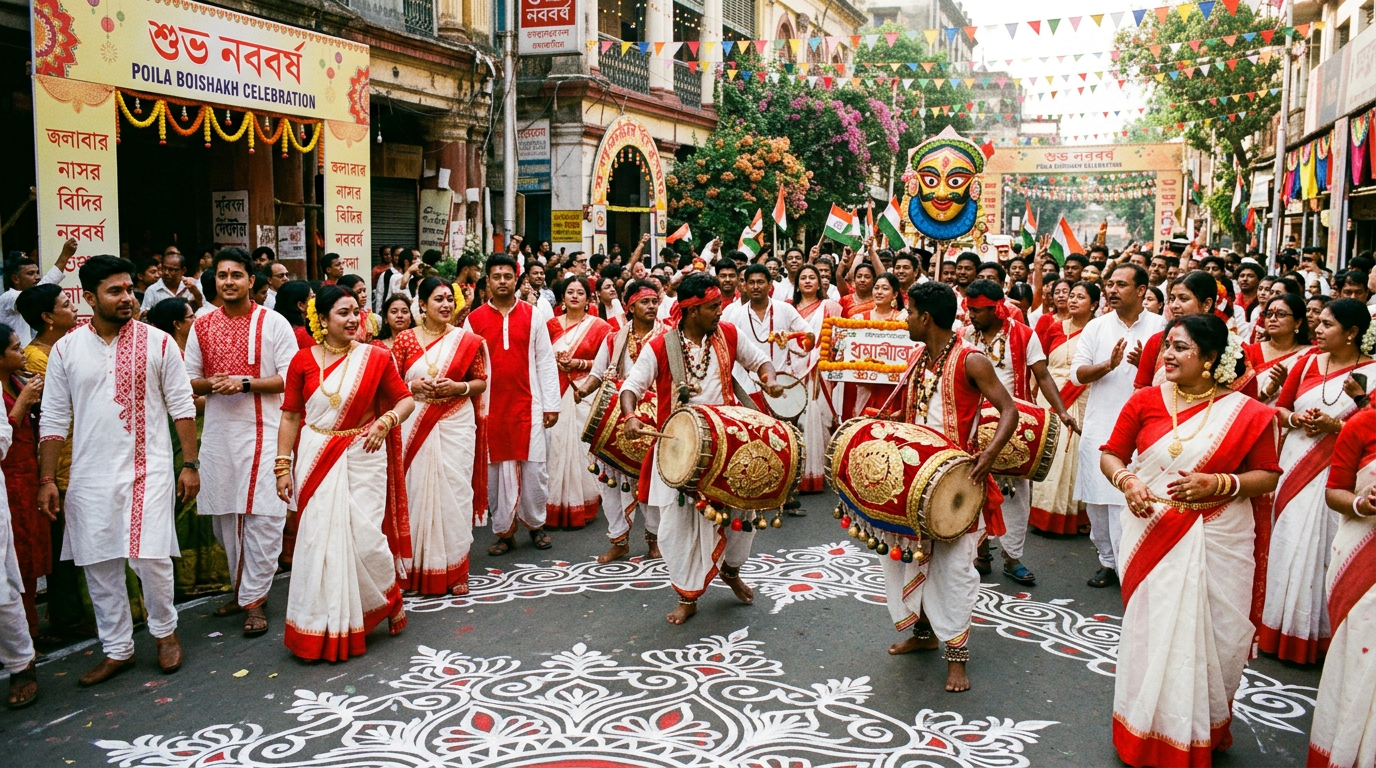
Poila Boishakh — the Bengali New Year — is one of the most joyous days on Chittaranjan Park’s calendar. On April 15, 2026, CR Park welcomes Bengali Year 1433 with temple prayers, new clothes, mountains of sweets, and an unmistakable feeling of fresh starts.
Morning at Kali Mandir
The day begins at dawn with Mangalarati at Kali Mandir. Families dressed in fresh white-and-red (women in traditional laal-paar sarees, men in fresh kurtas) queue for darshan and pushpanjali. The temple distributes bhog — typically Khichuri, Labra, and Chutney — to all visitors. By mid-morning the temple courtyard is packed, so arrive before 7:30 AM for a calm experience.
Shopping and Sweet-Shop Queues
Poila Boishakh is synonymous with new things — new clothes, new account books (Haalkhata), and new beginnings. CR Park’s Market No. 1 and Market No. 2 see brisk business in the days leading up to the event. On the day itself, the real action is at the sweet shops: Balaram Mullick, Dwarik, and others see snaking queues for Roshogolla, Sandesh, and special New Year boxes. Order in advance if you want a curated gift box.
Evening Celebrations
As the sun sets, cultural programmes spring up at Bangiya Samaj, community halls, and even private residences. Tagore recitals (Rabindra Sangeet) and Nazrul Geeti dominate the evening. Some blocks organise small pop-up handicraft bazaars featuring Bengali artisans, adding a festive market atmosphere to the residential lanes.
Haalkhata — the shopkeeper’s new ledger
The commercial half of Poila Boishakh is haalkhata, and it is the reason the markets feel different on this day. A shopkeeper closes the old account book and opens a new one — traditionally a red cloth-bound ledger — after a small puja at the shop, often with the first page marked with a swastika and the name of a deity.
Regular customers are invited in. Outstanding balances from the previous year are expected to be settled, at least in part, and in return the customer is given sweets and a calendar for the new year. The transaction is social as much as financial: haalkhata is how a shop and a family formally acknowledge a continuing relationship. Visitors who wander into a CR Park shop on this morning may well be handed a sweet without having bought anything, and refusing is not really an option.
What the new year actually marks
The Bengali year is counted as Bangabda, and unlike most of the festival calendar its opening date barely moves — Poila Boishakh sits in mid-April every year, because the Bengali months are reckoned by the sun rather than the moon. Boishakh is the first of twelve months and belongs to Grishmo, the Bengali summer. The Bengali calendar guide sets out the full sequence and explains why this date holds steady while Durga Puja does not.
The day before, Choitro Sankranti, closes the old year, and the end-of-Choitro sales in Bengali markets are a tradition of their own — clearing stock before the new ledger opens.
What gets eaten
There is no single fixed menu, and the two big regional traditions differ. In Bangladesh the day is strongly associated with panta bhaat — rice fermented overnight in water — served with fried hilsa, green chilli and onion. In West Bengal and among most CR Park households the emphasis falls instead on a full celebratory meal at home and on sweets: rosogolla, sandesh, mishti doi and boxed assortments given and received all day.
The Bengali sweets guide covers which shops in the colony are known for what, which is worth reading before the day rather than on it — the queues on Poila Boishakh are the longest of the year outside Durga Puja.
Practical Tips
- Visit Kali Mandir before 7:30 AM to avoid long queues
- Pre-order sweets from CR Park’s sweet shops at least two days in advance
- Wear new clothes — the tradition is auspicious and you’ll fit right in
- Evening programmes usually start around 5:30 PM and are free and open to all
Frequently Asked Questions
What is Poila Boishakh and when is it in 2026?
Poila Boishakh is the first day of the Bengali calendar year. In 2026 it falls on April 15, marking the start of Bengali Year 1433 (Bangabda). It is one of the most joyous non-religious celebrations in CR Park.
What happens at Kali Mandir on Poila Boishakh?
Kali Mandir holds a special Mangalarati (auspicious morning prayer) at sunrise, followed by bhog distribution. Devotees visit the temple in new clothes to seek blessings for the new year.
Is Poila Boishakh a public holiday in Delhi?
No, Poila Boishakh is not a Delhi government holiday. However, many Bengali-owned shops and businesses in CR Park may open late or close early. Sweet shops remain open and are extremely busy.